
GEOGRAPHICAL HISTORY
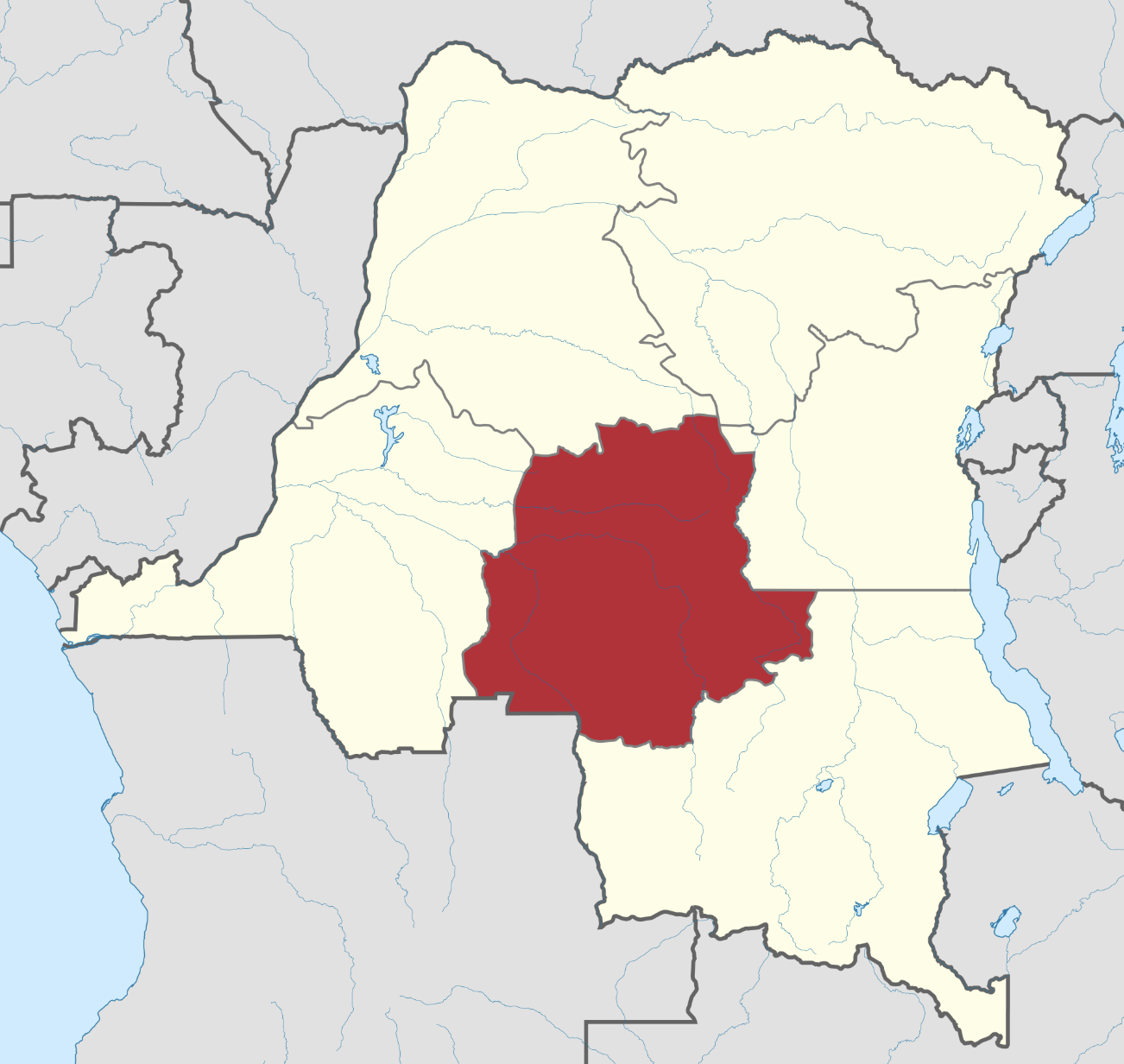
Kasai is the former province, in the south central of the Republic of the Congo (Kinshasa) with Luluabourg (Kananga Malandi wa Nshinga) as its capital. Situated between the Kasai and the Sankuru rivers, the Kuba kingdom of the Shongo people existed from the early 17th century . The constant warring between the Luba and Bena Lulua peoples was partly responsible for the secession in 1960 of the Baluba-dominated Mining State of South Kasai, headed by Albert Kalonji, who proclaimed himself “Mulopwe” of South Kasai.
The central government re-established control over the whole of Kasai in December, 1961. The region is now divided into Kasai-Occidental and Kasai Oriental provinces. The Kasai Oriental (formerly South Kasai) province, with Mbuji Mayi as its capital, is the Democratic Republic of the Congo’s diamond centre and is geographically located in the south eastern part of the country.
Having two climates or seasons, rainy and dry, it is divided as such: Mbuji Mayi and Kalelu, Lubilanji and Lomami, Lwalaba and lake Tanganyinka . Their “form” of language, Ciluba (Tshiluba) , is one of the four national languages in the Democratic Republic of the Congo. Culturally , they have very strong sense of belonging.
It was estimated in 2005 that the population of East of Kasai stood at 4 .8 million with a surface area of 173,110 Km2 and West of Kasai at 4.3 million with a surface area of 154,741 Km2 .